Birch Tree Farm
All Creatures Great and SmallBirch Tree Farm is the Coulston farm of Dick Rudd and his family, a modest hill-farming household in the Yorkshire Dales. Its significance rests not on scale or grandeur but on the character of the people who live and work there: the Rudds combine limited means with generosity, and Dick’s ambition to improve his cattle gives the farm a future-facing purpose. In its cobbled byre, that purpose takes visible form in Strawberry, a prized Dairy Shorthorn whose illness tests both James Herriot’s veterinary judgment and his sense of responsibility toward the family.
Setting and access
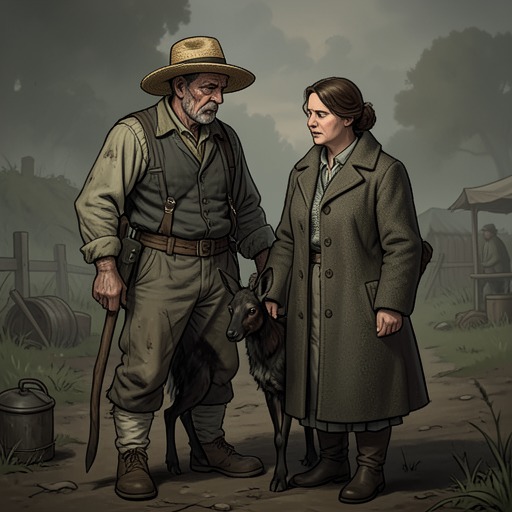
The farm first enters the narrative through a winter call that brings Dick to Skeldale House at six in the morning. He arrives in rain, wearing an old army greatcoat and balaclava, and asks James Herriot to attend a heifer struggling to calve. Dick has cycled from the farm, about four miles away at Coulston; the journey makes the practical demands of veterinary work in the district part of the location’s introduction. Birch Tree Farm is not presented as an isolated pastoral refuge, but as a working place connected to the town by urgent calls, difficult weather and the need to get help to livestock.
The wider setting supplies a changing backdrop to such work. In the Dales, winter snow can fill roads and erase familiar landmarks, forcing veterinarians to drive as far as possible and walk the rest. Spring brings a different pressure: livestock weakened by winter and a concentrated rush of lambing cases. Those descriptions concern the district and veterinary practice generally, rather than a specific incident at Birch Tree Farm, but they place the farm within a landscape where seasonal conditions govern access and workload. The same rural world can be seen as beautiful and demanding: green hills, dry-stone walls and open air coexist with long journeys, animal illness and hard work.
The Rudd household and its hospitality
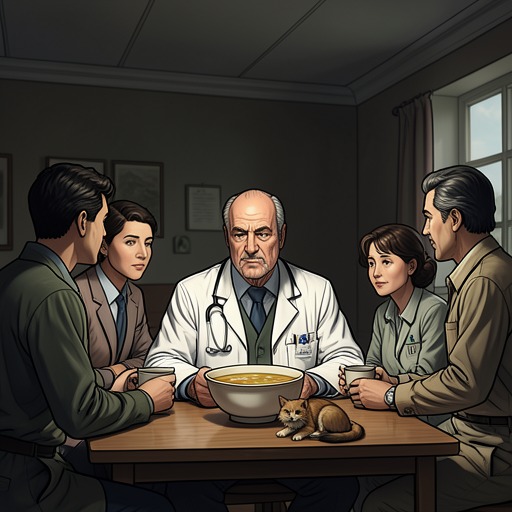
Dick believes in seeking veterinary advice, so James becomes a frequent visitor. After each call, the household follows an established custom: work stops, the family gathers, and the visitor is given tea. On Sundays all nine Rudds sit around as James drinks, listening to his remarks with such attentive agreement that he feels both gratified and humble. The ritual turns a professional visit into an expression of welcome, while also showing how seriously the family takes the veterinarian’s presence and advice.
The household’s generosity extends beyond the kitchen. After a visit, James may find home-made scones or eggs on his car seat, gifts whose modesty makes their cost to the family apparent. Mrs. Rudd manages a large household on the milk cheque from Dick’s few cows; a bowl of rice pudding, served before dinner, is one practical illustration of how she feeds them. These details give the farm an economy as well as a warmth: hospitality is not effortless abundance, but something offered from limited resources. Dick’s humour, integrity and steady resolve shape the household’s welcome, and James comes to regard the family as friends.
A herd in the making
Dick’s ambition is to improve his stock until Birch Tree has a dairy herd worthy of his ideals. He knows that, without money behind him, progress will be slow and may not be completed in his own lifetime. He imagines that one day, perhaps when his sons are grown, people will come to admire the farm’s cows. His hope is therefore both personal and generational: improving the herd is a long project rather than an immediate route to prosperity.
The arrival of Strawberry marks its beginning. Dick leads James into the byre with an air of restrained excitement. The other cows are a varied and often unimpressive group, including older animals discarded by better-off farmers and rough-haired cattle raised by Dick himself. Against them, Strawberry stands out as a beautiful Dairy Shorthorn. Dick describes her as a seven-gallon cow with high butterfat and expects that a calf from her will be valuable. Although her pedigree gives her a grand name, Mrs. Rudd calls her Strawberry. In the primitive byre, with its wooden partitions and rough stone walls, she represents more than a good purchase: she is, to James, the foundation of the herd Dick has dreamed of building.
Strawberry’s illness and the farm’s stakes
About a month later, Dick calls James back because Strawberry, previously giving milk well, seems unwell. She is still eating, and her temperature and lungs are normal, but she gulps when swallowing and has a faint snoring sound. James suspects inflammation or the beginning of an abscess behind the throat, a dangerous site because a large swelling could interfere with breathing. The first signs are slight; their seriousness becomes clear only as the cow deteriorates.
When Dick returns after three days, Strawberry has declined dramatically. James finds her in the byre, reduced to a hide-covered skeleton, breathing raspingly and coughing painfully. Her terrified eyes remain fixed on the wall, and saliva dribbles from her mouth. Dick’s grim description of her as now the worst-looking animal on the farm measures the reversal: the cow who had embodied the future herd has become a source of acute worry. James later imagines the familiar signs of a dead animal being removed and approaches the silent box expecting failure. Instead, Strawberry is standing and eating hay, tugging it through the rack with evident appetite. She is still extremely weak, but the steadiness of her eating gives James grounds to hope that she will regain strength. The farm’s importance in this episode lies in the way a medical crisis becomes inseparable from a family’s years of work and investment.
A place of professional and personal connection
Birch Tree Farm deepens the relationship between James and the people he serves. Dick’s trust makes him a frequent caller, while the family’s tea, attention and small gifts turn routine veterinary visits into a continuing exchange of care. Their confidence in James matters especially when Strawberry’s case appears to end in failure: instead of reproaching him, the Rudds have thanked him and offered cabbages. The gesture sharpens his frustration with himself because their generosity is set against his fear that he has not helped them.
The farm is also where Dick’s private hopes become legible. Strawberry’s dark roan coat and fine Dairy Shorthorn form do not merely distinguish her from the rest of the herd; they make tangible the quality of stock he wants Birch Tree to become known for. Later, Dick and Mrs. Rudd invite James to their silver wedding celebration, planned at the King’s Head in Carsley. The invitation extends their relationship beyond professional calls and confirms the farm as a centre of friendship as well as agricultural work. Through the Rudds’ household and the changing fortunes of Strawberry, Birch Tree Farm becomes a portrait of rural life built from practical labor, constrained means, hospitality and hopes invested in the next generation.